ECOWAS Energy Information System
ECOWAS Commission · EU-funded AGoSE-AO project
Design of the regional energy database, business and validation rules, web platform, energy balances and indicators for the 15 Member States.

We design energy information systems, climate databases and planning tools that help governments, regional organisations and companies in Africa make better energy decisions.
Two regional and six national platforms, designed, deployed and handed over to the institutions that run them today.
ECOWAS Commission · EU-funded AGoSE-AO project
Design of the regional energy database, business and validation rules, web platform, energy balances and indicators for the 15 Member States.
Expertise France · National Bureau of Statistics
Database schema, web platform for data entry and visualisation, validation rules, Sankey diagrams, dashboards and staff training.
ECOWAS Commission
Deployment of SIG-SE platforms adapted from the regional architecture, initial data import, and training of national teams.
Ministry of Energy of Niger · World Bank HASKE project
Digitalisation of the national EIS: collection, validation, storage and dissemination of energy data, balances and indicators for the Ministry of Energy.
IFDD · WAEMU Commission
Methodological framework, business rules, training of national focal points and co-authoring of the WAEMU Energy Atlas.
Institut de la Francophonie pour le Développement Durable (IFDD)
Design of an e-learning course for francophone African practitioners: energy statistics, data collection systems and indicators for planning.
The tool behind our national and regional deployments: multi-country data collection, validation rules, energy balances, indicators and dashboards. A continental demo is online.
For Niger's Ministry of Energy, under the World Bank-funded HASKE project: a national energy statistics portal, interactive energy flow analysis and a GIS of energy infrastructure.
 Watch lesson 00
Three short videos to understand what an energy information system is, how it is governed and which concepts it relies on, followed by a test to check your knowledge.
Three complementary areas of expertise, delivered end-to-end or individually.
Design, development and deployment of energy information systems and climate databases.
Turning complex data into measurable action: planning, efficiency and emissions.
Capacity building for energy ministries, statistics offices and companies.

Two training sessions in Niamey, in June and July 2026: first the Ministry of Energy’s EIS staff, then 20 data contributors from the energy sector. By the end of each week, participants were entering, correcting and validating real data on their own.
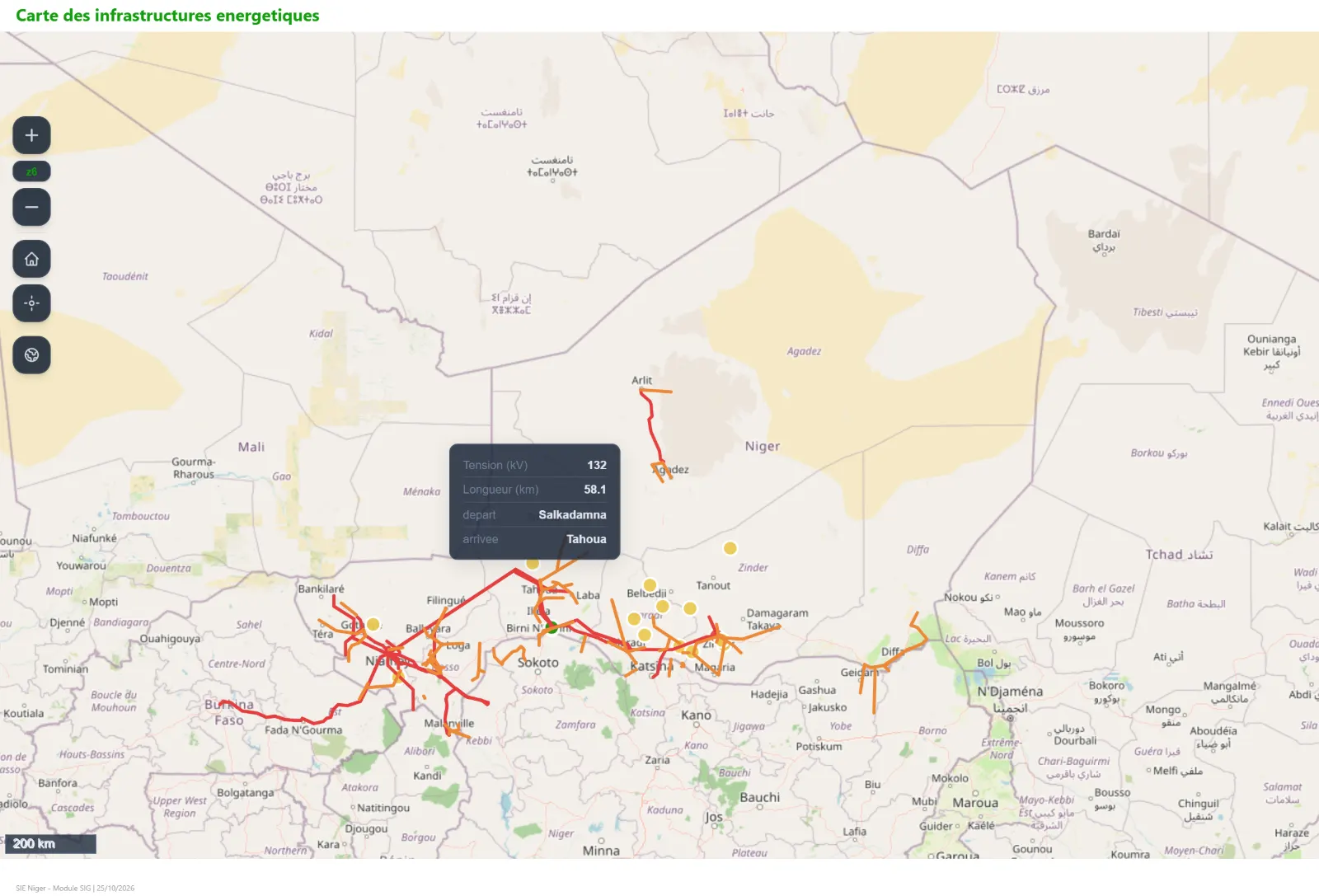
The Niger Energy Information System now covers 2000 to 2025. It shows a historic shift, crude oil overtaking wood energy, and delivers 2025 statistics ready for publication by the eighth month of the year.
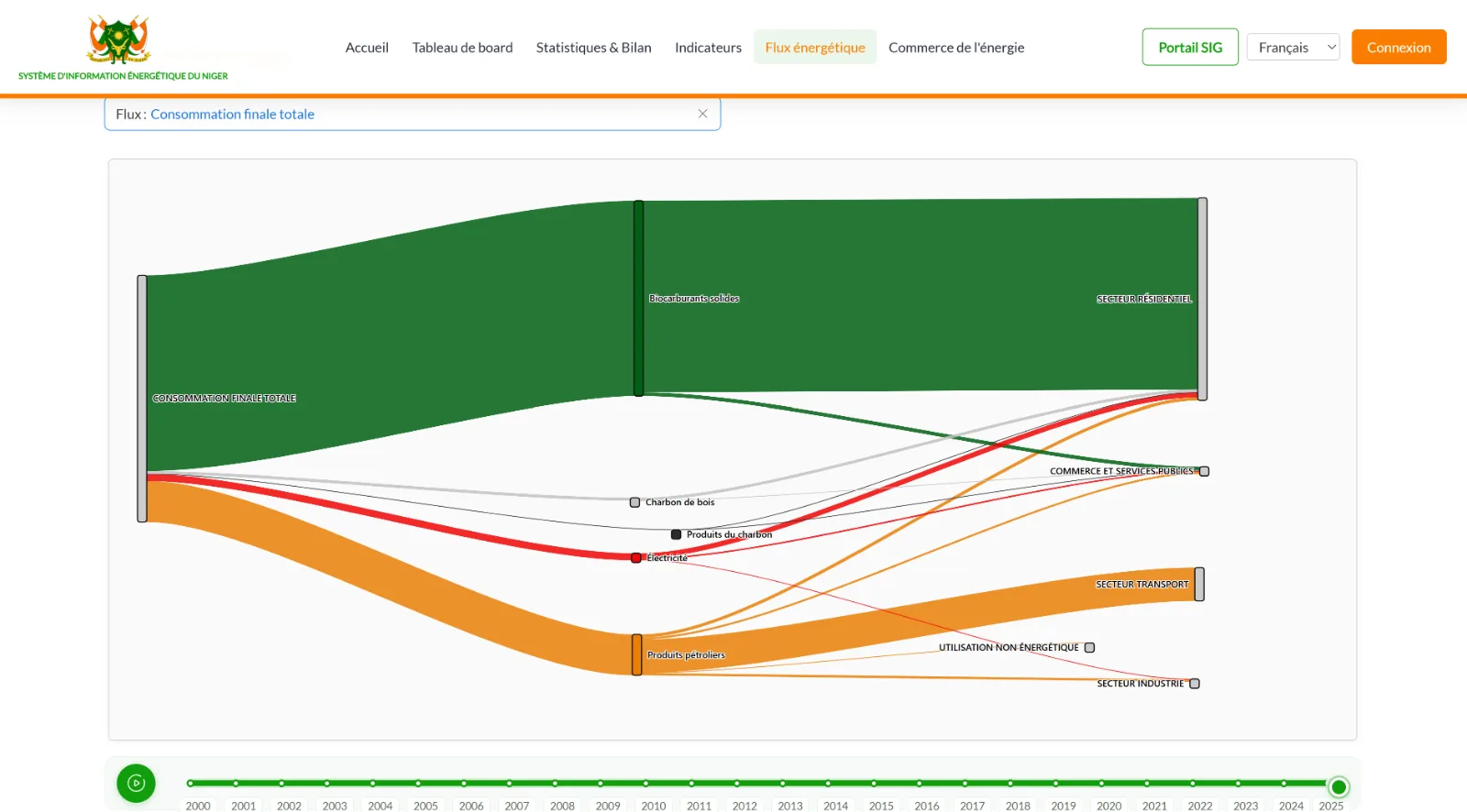
In 2000, road transport and electricity dominated Niger’s CO2 emissions. Since 2011-2012, oil refining has become the leading source. A structural shift that only a reliable, sector-level information system can make visible.